Location: West Hills, New York
Year: 1810
One of America's greatest poets, Walt Whitman, was born in the village of West Hills near Huntington in 1819. The house Whitman was born in was built by Whitman's father in 1810, and is one of the few remaining examples of Long Island colloquial architecture.
The house became a New York State Historic Site in 1957, and a National Historic Site (and listed on the National Register of Historic Places) in 1985. thus saving the house from the ever more-densely crammed reality of Long Island.
Location: Four of the Five Boroughs
Year: 1940s-1960s
Bungalow Bar, founded by a Greek immigrant family, was a brand of ice cream sold from trucks to consumers --- mostly children --- on the streets in the New York City boroughs of Brooklyn, Queens Staten Island and The Bronx, as well as in Yonkers and Nassau County during the 1940s, 1950s and 1960s.
Bungalow Bar trucks had a
distinctive, quaint, and decidedly old-fashioned look: white, with
rounded corners, and made to look like a small, mobile bungalow topped with a dark brown shingle roof. Good Humor's trucks appeared larger, more angular, and more
modern.
Perhaps for this reason, Bungalow Bar suffered from a terrible ---
and completely undeserved --- reputation among children, who believed the product
inferior. This reputation was not helped by Bungalow Bar's prices which were half of Good Humor's. Children mocked Bungalow Bar with a rhyme that had many neighborhood variations:
Bungalow Bar
Tastes like tar
Put it in a jar
And throw it far
in Flatbush, Brooklyn; and
Bungalow Bar
Tastes like tar
The more you eat
The sicker you are
in Queens; and another, from the Bushwick section of Brooklyn:
Bungalow Bar
Tastes like tar
Take a bite
And spit it far
Bungalow Bar, just like Good Humor,
went out of business when the price of gasoline rose dramatically in
1973. Without a national presence in stores, Bungalow Bar vanished
completely.
Location: The Queens Museum
Year: 1964
The Panorama of the City of New York is the jewel in the crown of the
collection of the Queens Museum and a locus of memory for visitors from
all over the globe. Conceived as a celebration of the City’s municipal
infrastructure by urban mastermind and World’s Fair President Robert
Moses for the 1964 Fair, the Panorama was built by a team of more than
100 people working for the great architectural model makers Raymond
Lester & Associates over the course of three years.

Comprising an area of 9,335 square feet and built to a scale of 1:1200
where one inch equals 100 feet, the Panorama is a metropolis in
miniature. Each of the city’s 895,000 buildings constructed prior to
1992 and every street, park and some 100 bridges are represented and
assembled onto 273 individual sections comprising the 320 square miles
of New York City. In this miraculously scaled cityscape, the borough of
Manhattan measures a seemingly vast 70 x 15 feet and the Empire State
Building is a towering 15 inches tall while the Statue of Liberty is
only 1-7/8 inches in height. Long Island and New Jersey peek onto the
model as black shadowy masses to the east and west.
Year: 1964
Location: Flushing Meadow Park, Queens
One of the oddest and least seen exhibits at the World's Fair of 1964-65 was the "Underground Home" a modular, fully-functional subterranean residence. Designed by a Texas builder named Jay Swayze in the aftermath of the Cuban Missile Crisis, the Underground Home was designed to protect families from the aftermath of an atomic attack. Swayze included grow lights in the Underground Home so that residents could have live plants, though the model was decorated with both real and silk plants. Small, invisible and expensive, the Underground Home was affordable only by a few wealthier Americans, though Swayze claimed to have 516,000 orders on the books (he also claimed that over a million people had toured his exhibit, an impossibility given its size versus the length of the Fair). Although the Underground Home was a bust in 1965, Swayze resurrected the idea in 1980 when Ronald Reagan became President. The fall of the Soviet empire finally put paid to the Underground Home, though a few remain spotted around the country, true architectural oddities.

Location: Patchogue, New York
Year: After 1945
William Patrick Hitler (1911-1987), who Adolf Hitler called, "My loathsome nephew,"
was the son of Alois Hitler Jr., Adolf Hitler's half-brother.
"Willy" Hitler was born in 1911 in
Liverpool. During the prewar years of National Socialist Germany, Willy lived high off the Nazi hog, using his family connections to live the life of a playboy, carousing with showgirls, drinking heavily, cadging money from high Nazi officials, driving the most expensive German automobiles which he got for free, and generally making a high-profile pest of himself to his totalitarian uncle, who seemed to be powerless to stop him. According to many sources, Willy knew a family secret --- and Der Fuhrer was terrified that he might spill the beans.
As the clouds of war gathered over Europe, Willy returned to England, arriving there in 1939. Again, he capitalized on his family connection, working for MI-6 and doing anti-Nazi propaganda spots for public broadcast.
After a brief time in Britain, Willy moved to New York City. Again, he used his name to work for the State Department, feeding information to the American government.
After 1945, Willy changed his name to "Patrick _______________" (the family's new last name is closely-kept information), and
moved from New York City out to Patchogue on Long Island, where he bought an unobtrusive house on Silver Street. He kept a low profile, though he spoke German at home with his family (oddly enough, as he had been raised by his English mother in Liverpool). A few of the neighbors noted "Patty"'s distinct resemblance to Adolf Hitler, but no one knew him as anything but Patty who kept very much to himself/ Perhaps a little "Boys From Brazil"-like, Patty ran a small business out of his house --- doing blood tests.
He married and raised four
Baby Boomer sons with a passion for The Beatles, named Alexander, Louis, Howard and Brian, before he died in 1987 at
age 76.
Howard died in a car accident in 1989. The other brothers
continued low-profile jobs, Alexander as a social worker, Louis and
Brian with their own landscaping business. None of them have children. They
are the last members of Adolf Hitler's paternal bloodline.
Year: 1777
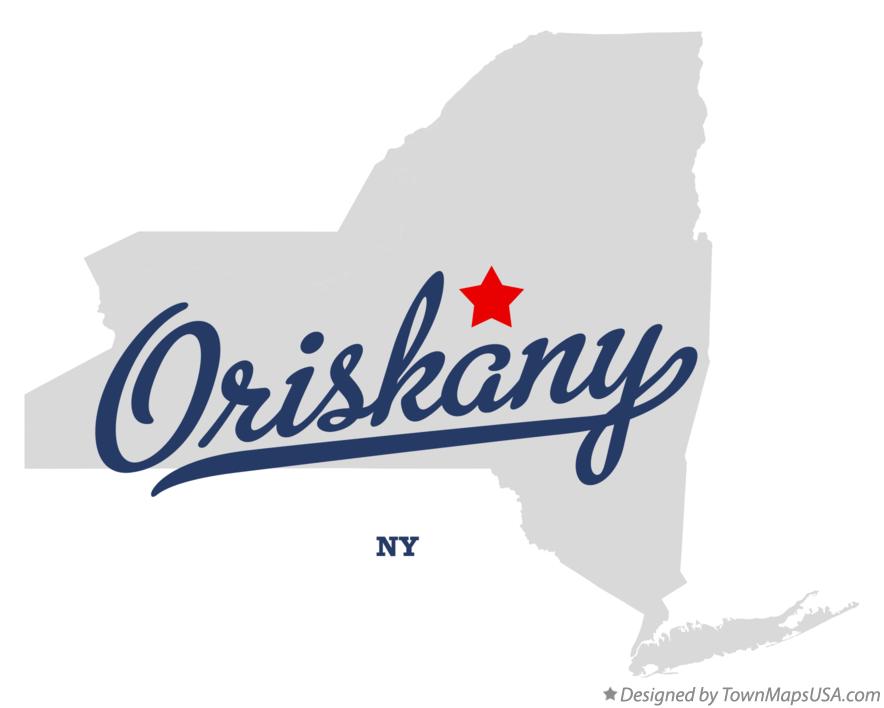
Location: Oriskany, New York
The Battle of Oriskany, fought on August 6, 1777, is remembered as the bloodiest battle of the American Revolution.
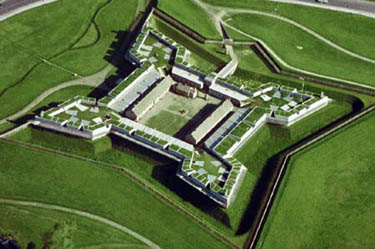
A Patriot force of 800 men, made up of the Tryon County Militia and Oneida warriors under the command of General Nicholas Herkimer attempted to relieve isolated and threatened Fort Stanwix.
Herkimer had not wanted to fight. An experienced soldier, he realized that the County Militiamen were inexperienced and ill-trained, and he feared disaster at the hands of the enemy, who had received weapons and training from the British. Several of his subordinates accused him of cowardice, so, stung, he chose to lead the relief column.
Herkimer's men were ambushed and defeated by a combined force of Loyalist Militia, Mohawks, Senecas and other allies of several non-Haudenosaunee Native American tribes, numbering about 500 men. The commander of the Loyalist forces was Leftenant Colonel Barry St. Leger, whose Adjutant was General Herkimer's own brother.
This was one the few battles in the war in which almost all of the participants were North Americans; no overseas British troops or officers were involved. Indeed, the Battle of Oriskany was effectively a Civil War, with members of the Six Nations tribes fighting on both sides and Loyalist and Patriot friends, neighbors, and family bearing arms against each other.
The Loyalists ambushed the Patriots in a small valley about six miles east of Fort Stanwix, near the present-day village of Oriskany, along a stream known today as "Bloody Creek." Bloody Creek has a steep and narrow valley, but the valley was the easiest path through the heavily wooded and tumbled area. Thus, the Patriots were bottlenecked in the valley when the ambush occurred. Herkimer, who was leading the force, was shot from his horse, and died two days later.
The Seneca war chiefs Sayenqueraghta and Cornplanter led the first assault along with the famed Mohawk war chief known as Joseph Brant.

In the resulting confusion, numbers of Patriots tried to flee, only to be cut down by Loyalist troops. The Patriot force lost 500 of its 800 men. The Loyalists lost 150 of 500, mostly Native Americans. The battle turned however, when a raiding force from Fort Stanwix, hearing the nearby gunfire, arrived and scattered the pro-British forces. Thus, despite the losses, Oriskany is accounted an American victory.
The Battle of Oriskany led to the shattering of the Iroquois Confederacy, a result which strengthened the American position.
The area around Fort Stanwix itself was not pacified until mid-August, when a large contingent of Continental troops under General Benedict Arnold arrived to reinforce the fort.
Location: Upstate New York
Year: circa 400,000,000 million years ago
While New York State is not a treasure house of dinosaur fossils it is a treasure house of early marine fossils predating the Mesozoic Era. During the time before the dinosaurs New York was covered, uncovered, covered again, uncovered again, and covered yet again by a succession of shallow seas teeming with various forms of life. As the advance and retreat of these seas took millions of years, multiple layers of the flora and fauna of these successive eras may be found within New York State's boundaries.
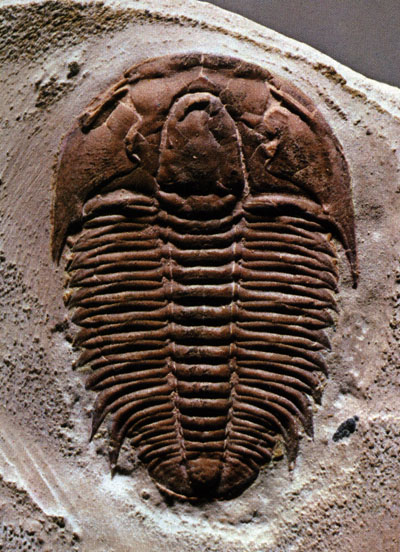
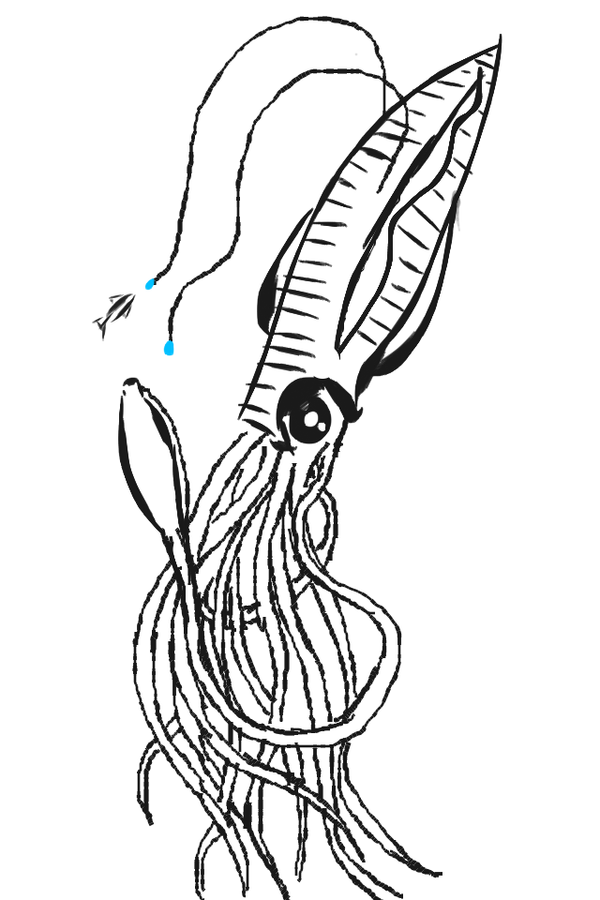
The seas that covered New York State contained vast coral reefs and submarine thickets of sea lilies that provided homes for armored squid and giant sea scorpions (the official State Fossil). Trilobites in their thousands of subspecies teemed in these warm water oceans. The author Mark Twain collected brachiopods (sometimes called butterfly stones) on his Elmira farm.
Upstate is so rich with fossil remains that a 19th Century survey of New York State fossils by James Hall, the first State Paleontologist, ran to 13 large volumes.