Saturday, July 19, 2014

A shallow and warm sea

Location:   Upstate New York
Year:   circa 400,000,000 million years ago


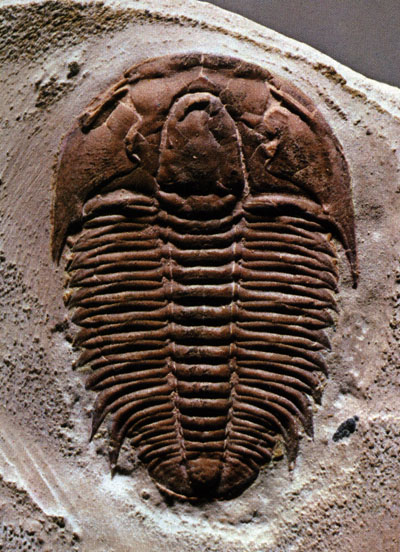
While New York State is not a treasure house of dinosaur fossils it is a treasure house of early marine fossils predating the Mesozoic Era. During the time before the dinosaurs New York was covered, uncovered, covered again, uncovered again, and covered yet again by a succession of shallow seas teeming with various forms of life. As the advance and retreat of these seas took millions of years, multiple layers of the flora and fauna of these successive eras may be found within New York State's boundaries. 


The seas that covered New York State contained vast coral reefs and submarine thickets of sea lilies that provided homes for armored squid and giant sea scorpions (the official State Fossil). Trilobites in their thousands of subspecies teemed in these warm water oceans.  The author Mark Twain collected brachiopods (sometimes called butterfly stones) on his Elmira farm. 


Upstate is so rich with fossil remains that a 19th Century survey of New York State fossils by James Hall, the first State Paleontologist, ran to 13 large volumes.
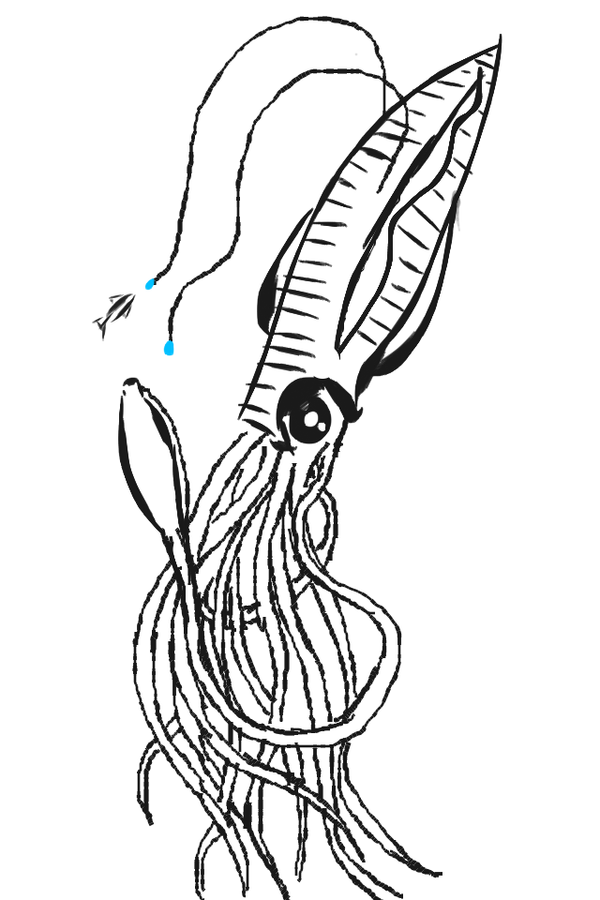

Armored squid by splat1347
  

Friday, July 18, 2014

Pastrami

Location:   Ludlow Street and Houston Street, Manhattan
Year:   1888


Katz's Delicatessen is a kosher style restaurant located at 205 Houston Street on the Lower East Side. The word delicatessen is a portmanteau word invented by Jewish immigrants from the English word delicacy and the Yiddish/German word essen, to eat. 

Katz's is most famous for its stuffed Pastrami sandwiches on rye. Pastrami  (פּאַסטראָמע) is a popular delicatessen meat usually made from beef brisket spiced with garlic, coriander, black pepper, paprika, cloves, allspice, and mustard seed. Just like corned beef, pastrami was originally created as a way to preserve meat before modern refrigeration.

Pastrami was brought to the United States by Jewish immigrants from the Balkans, and was originally a Turkish dish.  

New York’s Sussman Volk is generally credited with producing the first pastrami sandwich in 1887. Volk, a kosher butcher and New York immigrant from Lithuania, claimed he got the recipe from a Romanian friend. 

Volk prepared pastrami according to the recipe and served it on sandwiches out of his butcher shop. The sandwich was so popular that Volk converted the butcher shop into a restaurant to sell pastrami sandwiches. Soon enough, Volk had competition. The Iceland brothers opened their pastrami delicatessen in 1888, and not long after partnered with the Katzs, who bought them out in 1892. 

Katz's originally stood across the street, but the construction of the subway system necessitated a move in the late 19th Century. The original entrance was on Ludlow Street. Since its founding, it has become world famous among locals and tourists alike for its pastrami sandwiches and hot dogs, both of which are widely considered among New York's best. 


Each week, Katz's serves 10,000 pounds of pastrami, 5,000 pounds of corned beef, 2,000 pounds of salami and 12,000 hot dogs. During World War II, Katz's began the tradition of charging a special reduced rate for servicemen's families. Katz's would then ship it's cured meats overseas to U.S. duty stations. It's famous slogan is, "Send a salami to your boy in the Army," which more or less rhymes on the Lower East Side. 


Who first put pastrami on rye is unknown, and who added a side of cole slaw is also unknown, but this combination has become the "classic" New York pastrami sandwich. Another variation is the "Rachel," which adds Russian dressing and sauerkraut to the mix, as opposed to a corned beef-based "Reuben."   

Thursday, July 17, 2014

The Death of a President

Location:   Buffalo, New York
Year:   1901 

The last photo taken of President McKinley, taken as he arrived at the Temple of Music. Note the lack of a bodyguard.

William McKinley, the 25th President of the United States, was shot and fatally wounded on September 6, 1901 inside the Temple of Music on the grounds of the Pan-American Exposition in Buffalo, New York. 

The death of President McKinley

McKinley was shaking hands with the public when he was shot by Leon Czolgosz, an anarchist. The President died on September 14 from gangrene caused by the bullet wound to his abdomen.

Leon Czolgosz, self-styled anarchist. Czolgosz was never clear on the reason for the shooting. After his execution, carbolic acid was poured into his grave to dissolve his body.

McKinley initially appeared to be recovering, but took a turn for the worse on September 13, and died early the next morning at the Milburn House in Buffalo. 

Milburn House, circa 1901

Vice President Theodore Roosevelt took the oath of office at the Milburn House where he had come to see McKinley, and succeeded him in the White House. 

Theodore Roosevelt
 
After McKinley's murder, for which Czolgosz was put to death in the electric chair, the United States Congress passed legislation to officially charge the Secret Service with the responsibility for protecting the president.

Tuesday, July 15, 2014

"Simple-Minded Fools"

Location:   New York City
Year:   November 11, 1807

Washington Irving was the first person to call New York City "Gotham." 

Irving lifted the name from a medieval English story of a town named Gotham which meant "Goat’s Town" and was populated by "simple-minded fools."

The reference first appeared in Irving's satire magazine Salmagundi, which was similar to today's Mad Magazine.


The Jupiter

Location:   Schenectady
Year:   1868


The Jupiter (Central Pacific Railroad Locomotive #60) was a steam locomotive which made history as one of the two locomotives (the other being the Union Pacific's No. 119) to meet at Promontory Summit, Utah on May 10, 1869 during the Golden Spike ceremony commemorating the completion of the First Transcontinental Railroad.

The Golden Spike ceremony. Jupiter is to the left.

The Jupiter was built in September 1868 by the Schenectady Locomotive Works of New York, along with three other engines, #61 (Storm), #62 (Whirlwind), and # 63 (Leviathan). All four engines were dismantled and sailed 'round the Horn to San Francisco, where they were loaded onto a river barge and sent to the Central Pacific headquarters in Sacramento, then reassembled and commissioned into service on March 20, 1869.


The Jupiter was a wood burning locomotive. The distinctive conical chimney, known as a 'balloon stack', contained a spark arrestor.

The ceremony, as seen from Jupiter's cab. The spark arrestor is clearly visible inside the balloon stack


The Jupiter was not the locomotive originally scheduled to appear at Promontory Point. This honor was to go to the Antelope, which was damaged in transit. Jupiter, the following train, was pressed into service.  


It took many years for the Central Pacific Railroad to appreciate the Jupiter. The original Jupiter was scrapped in 1909, much to the later chagrin of the company, who found the brightly colored locomotive in demand for appearances on holidays and commemorative events. 

The replica locomotives at Last Spike National Historic Site

Other Nineteenth Century 4-4-0 locomotives (the number refers to the front, center and rear wheel arrangement of a locomotive) were repainted in the Jupiter's distinctive livery and exhibited in its stead until an identical replica was built in 1979, 70 years after the original was scrapped.

Wednesday, July 9, 2014

"The House of Death"

Location:   Greenwich Village
Year:   1850

New York City's most haunted house, the "House of Death" at 14 West 10th Street is supposedly haunted by 22 ghosts, the most famous of which is Mark Twain, who resided there from 1900-1901.


A Greek Revival brownstone, “Number 14″  was home to many members of New York’s elite, including Mrs. James Boorman Johnston whose husband had been a founding member of the Underground Railroad.

In 1900, the building became the residence of author Samuel Clemens (aka Mark Twain). Sightings of Twain decked in a white suit have been reported on the first floor and near the staircase. In the 1930s, a mother and daughter claimed to have encountered the author sitting near a window where he stated, “My name is Clemens and I has a problem here I gotta settle.” He disappeared moments later.


The house has been visited by multiple paranormal investigators who claim to have sensed the presence of a lady in white, a young child, and a gray cat. Tragically, the brownstone was home to a real life demon named Joel Steinberg. Steinberg was charged with first-degree manslaughter for beating his 6-year old daughter to death in 1987.    

Sunday, July 6, 2014

The Original Kazoo Company

Location:   Eden, New York
Year:   1916


The Original Kazoo Company in Eden, New York is the original kazoo company. 

The same belt and pulley machines that stamped and shaped the world's first metal kazoos in 1916 still stamp and shape kazoos today.  The finished product hasn't changed, either. The palm-sized, submarine-shaped musical instrument still makes a tinny vibration when someone hums into it.

The factory floor is now more a working museum than manufacturing facility. The plant, in a small corn farming community not far from Buffalo, opened in 1907 as a sheet metal workshop, producing stove and furnace parts and peanut vending machines. It began making kazoos in 1916 after its owner was approached about creating a metal version of the wooden instrument that had been around since the 1840s. Nothing much has changed since then, except the ownership.  Today, the site is operated by Suburban Adult Services Inc., a nonprofit organization serving mentally and physically disabled adults. As part of the acquisition deal, the original factory stayed in Eden and makes and sells 5,000 standard kazoos a year aside from the kazoo trumpets, french horn kazoos, trombone kazoos and other specialty kazoos it creates there.

The kazoo is believed to be the only musical instrument to be invented and produced in the United States. Today, the Eden factory produces the only American-made metal version. The most popular kazoo songs are Old MacDonald Had a Farm, I've Been Working on the Railroad, and Jingle Bells